
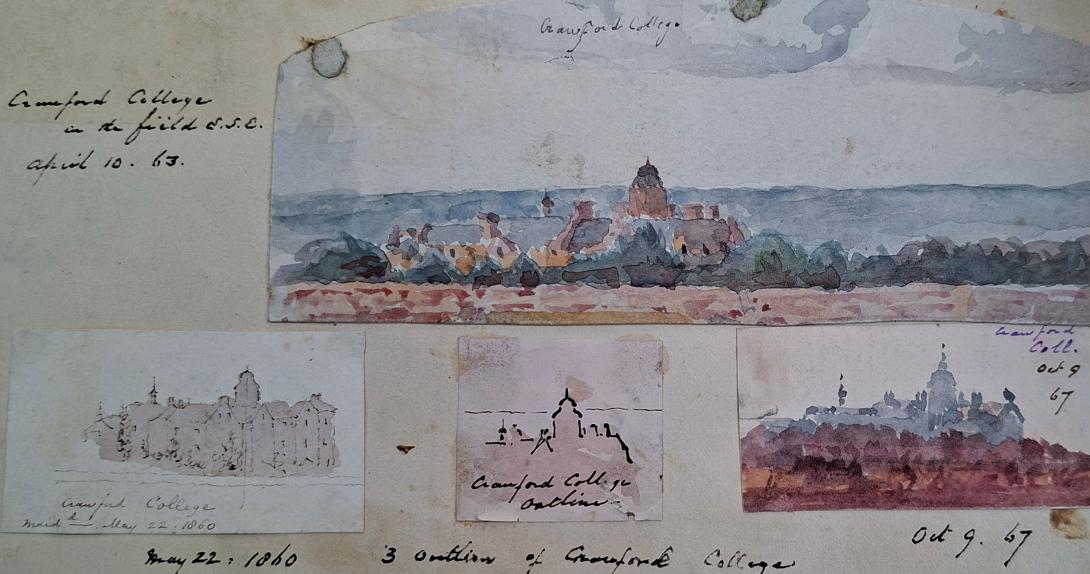
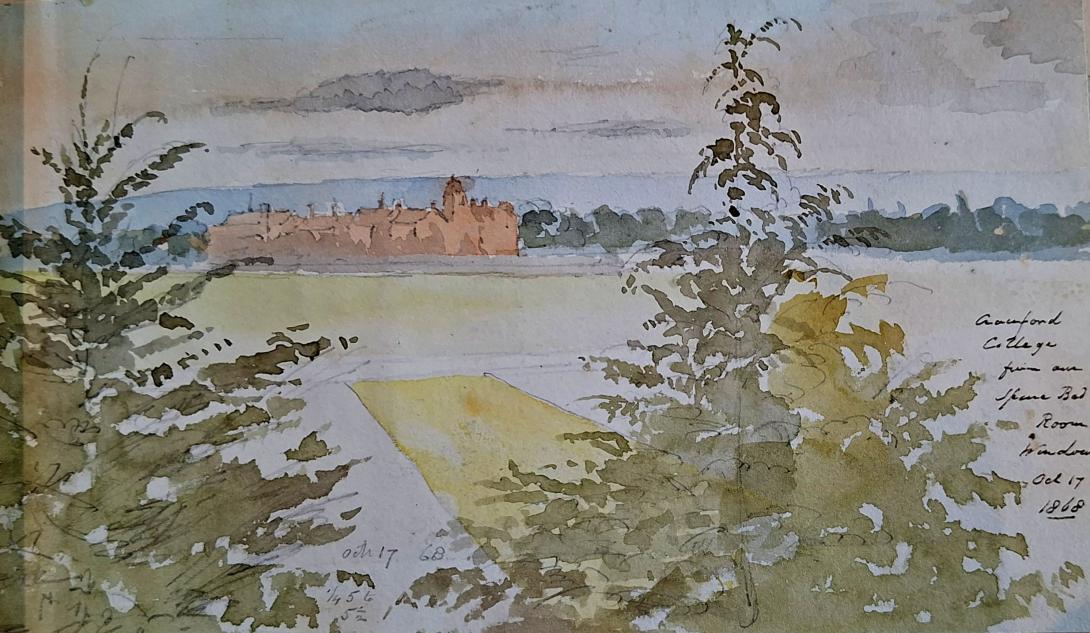
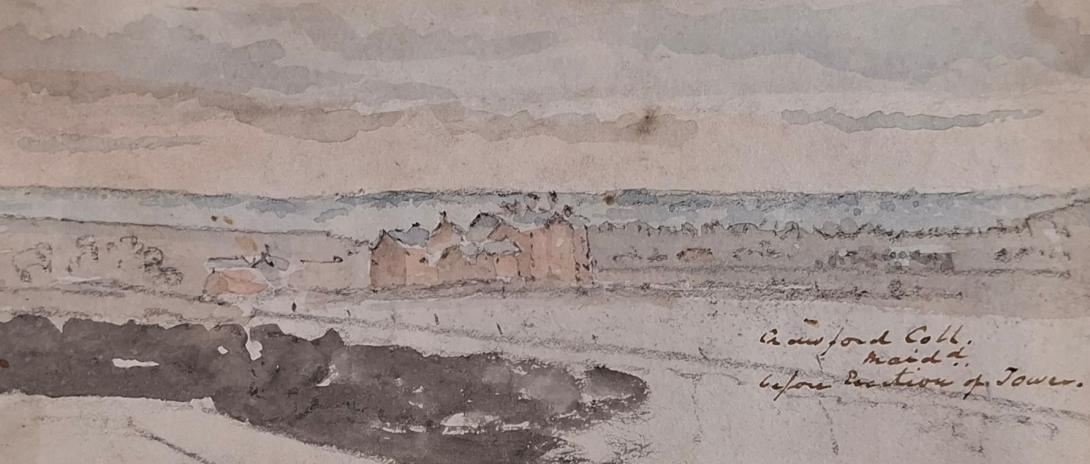
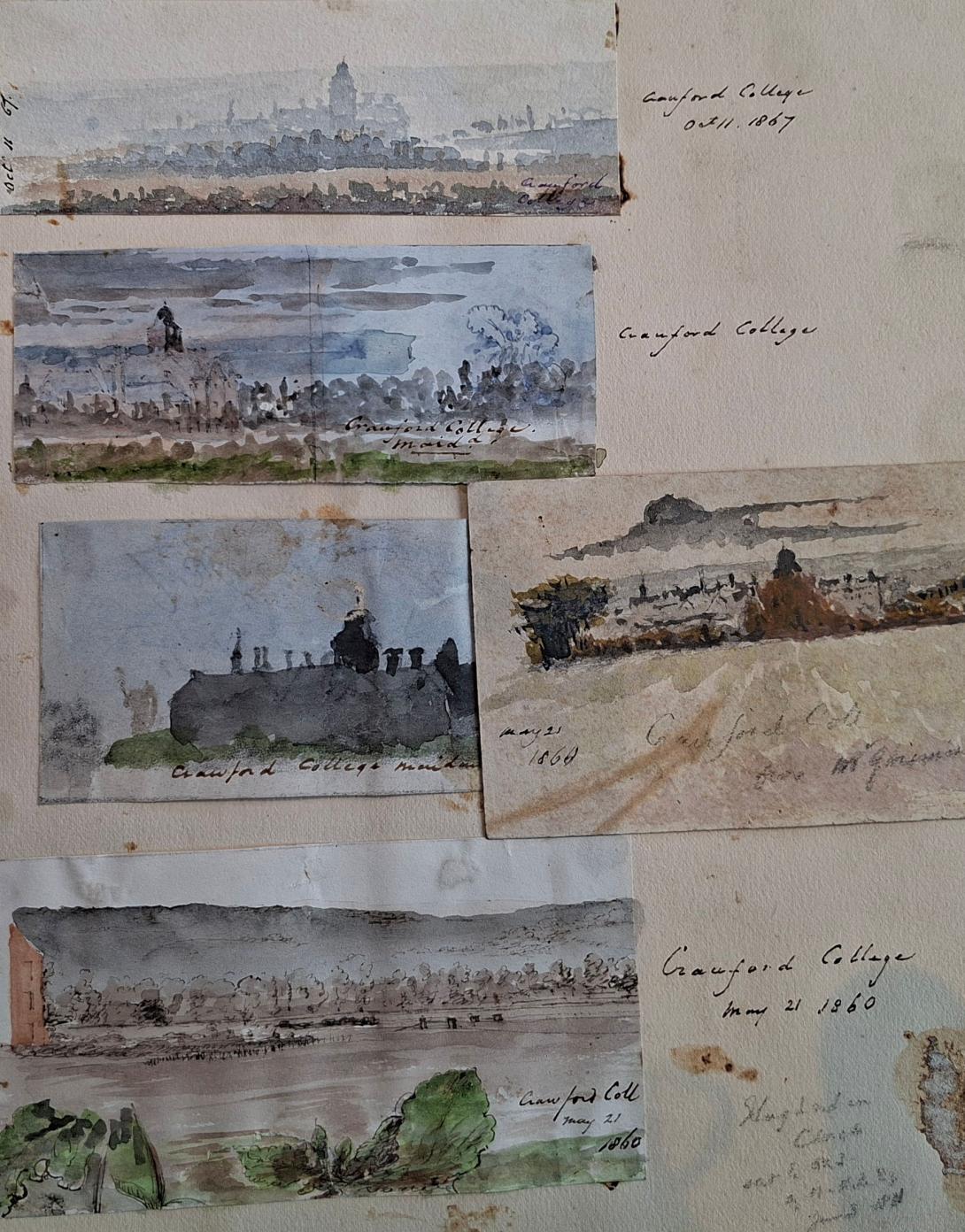
Craufurd College Maidenhead April 10 1863 & 1860 to 1867
It was founded in about 1830 by J.D.M. Pearce and stood on Gringer Hill. The college was huge and the grounds extended right down to College Avenue where the current Claires Court Girls school is (formerly the Convent of the Nativity).
JAMES PEARCE MA JP 1819 – 1898
A five-time mayor of Maidenhead, James Pearce gifted Kidwells park and many buildings to the town. James Pearce, the son of Rev. Pearce of the Congregationalist Church in West Street (now the URC), so prized the Victorian values of total abstinence from alcohol and tobacco that he was inspired to build the Cliveden Temperance Hotel in Queen Street, and the establish the Maidenhead Tent of Rechabites. With money lent to him by Mrs Crauford, he opened the Crauford Hall College in Marlow Road. His wife, Mary Brown, was a schoolmistress and helped him run it. James was a generous benefactor of Maidenhead and among his gifts to the town were Kidwells Park and the Pearce Hall, where the Commonwealth War Graves Commission now stands. He also built a common lodging house in Bridge Street, later used as the British Legion Club.Maidonians held James in great esteem and he was mayor five times – in 1856, 1857, 1862, 1889 and 1890.James’ family also made a significant contribution to the town. His son Major James Pearce was an engineer, and introduced electricity to Maidenhead. He built a development of concrete houses, Garden Cottages, as housing for the deserving poor. James junior was also mayor, in 1902.
Dr Walter Pearce, another son, was house surgeon at St Mary’s Hospital, Paddington, and he established the Maidenhead Drum & Fife Band. Soon after his marriage, he committed suicide by shooting himself at the hospital at the age of 36.A further son, Crauford Pearce, was a solicitor. In his fanatical quest for purity he carried the virtues of abstinence and self-discipline to such an extreme that he wasted away at the age of 24. James’ daughter, by contrast, lived to the age of 91.
There was Jewish boarding school – Craufurd College – which taught children from 8 to 17 years from London and the Provinces. It began in 1897, situated in the premises of a former prep school on Gringer Hill, and lasted till 1926. The seven-acre site was then used as a hospital by Middlesex County Council, but later demolished to make way for housing.’
Craufurd College was a school in Maidenhead that operated from the late 19th century until it was demolished around 1940. It has a connection to the local Jewish community as it appears to have been mentioned in historical Jewish press reports.
Given the small number of Jews living locally, it is a surprise to find that a Jewish boarding school was opened in Maidenhead in September 1897 – or maybe not, given the spacious area and good connections to London. It was Craufurd College, catering for Jewish boys from eight to thirteen years old, run according to Orthodox standards. Its principal was James Polack, previously the headmaster of West Hampstead School, London; he was the brother of Joseph Polack, the master of the Jewish House at Clifton College in Bristol. The great majority of pupils came from London but included boys from Liverpool and Birmingham, as well as a handful from New Zealand, Australia, and South Africa. The school lasted some twenty years.
Richard Suter was born in Greenwich, Kent on 30th March 1798, to William Suter and his wife Sarah Knights. On 7th January 1825 he married Anne Ruth Burn.
English architect. As Surveyor to The Fishmongers' Company he designed the severe Presbyterian churches for Ballykelly (1825–7) and Banagher (1825) on the Company's Estate in County Londonderry, drawings of which were exhibited at the Royal Academy in 1827. He was also responsible for the Model Farm (1823–4), the Lancasterian Schools (1828–30), the Company Agent's House (1830–2—now a hotel, much altered), a range of houses on the south side of the main road (1823–4), the lodge in the Presbyterian churchyard (1828), and the Dispensary (1829), all at Ballykelly, and all Classical. As Surveyor to Trinity House Corporation, he designed houses that were erected by Thomas Cubitt in 1821–3 on a site adjoining Trinity House. For The Fishmongers' Company he designed St Peter's Almshouses, Wandsworth, London (1849–51), and The Old School-House, Gresham's School, Holt, Norfolk(1859), in an Elizabethan style.
On the 1841 Census Richard, an architect and lawyer, can be found living in London with his wife Ann (listed as Ruth) and their two children, Richard George and Andrew Burn. Living with them is Edward D Suter. 1851 finds the family living in Tottenham Court in London, by this time Andrew had left the home, but I am unable to trace him on the 1851 Census. In 1860 Andrew marries Amelia Damaris Harrison. Both Richard George and Andrew were to become ordained ministers, with Andrew later becoming a Bishop and emigrating to New Zealand. Sadly in 1854 Anne Ruth was to pass away. In 1861, widowed Richard, Justice of the Peace for Maidenhead, is living at Castle Hill, Maidenhead, Berkshire. In 1862 he married Elizabeth Anne Pocock. In 1871 and 1881 Richard and Elizabeth are still living in Castle Hill. Richard was to pass away on 1st March1883.
Richard Suter & Annesley Voysey, architects, had their office at number 35 Fenchurch Street, but they did not have it all to themselves as they shared the premises with W.C. Franks, a tea broker, who will get a separate post some other time. The earliest mention I found of Richard Suter in Fenchurch Street is in 1832 when he is listed at that address in a list of contributing members of the Society for the Propagation of the Gospel in Foreign Parts. It says that he had been a member since 1829, but that does not mean he was already at 35 Fenchurch Street in that year.(1) In fact, that seems unlikely as the Sun Fire Office records give Messrs. Short and Co., merchants, as paying the insurance premium on the premises in May 1830. The Directory of British Architects 1834-1914 give the year 1827, but I do not know on what evidence. When Suter and Voysey became partners is also uncertain, but they had known each other since at least 1825 as Suter is named as one of the executors of Voysey’s will which was dated 22 July, 1825. The address given for Suter in the will is Suffolk Street, Southwark. Voysey then lives at Conway Street, Fitzroy Square.